
Should You Restore or Replace Commercial Tile?
 Schedule a Consultation!
What We Do
Who We Serve
SaniGLAZE Processes
Should You Restore or Replace Commercial Tile, Grout and Hard Surfaces?
Commercial tile, grout and hard surfaces don’t always need to be replaced. If the tile is still in good condition but looks worn, stained, or the grout lines are dirty, professional restoration may be a practical option. A new installation may make more sense when the tile or surface underneath has significant cracks or damage.
The decision depends on the condition of the existing tile, how the surface is used, and what your goal for the finished appearance is. SaniGLAZE can assess your tile and hard surfaces and help determine if restoration makes sense.
When Is Commercial Tile a Good Candidate for Restoration?
The first question isn't how old the tile is. It's whether the existing surface is still a good candidate for restoration.
Restoration may be worth considering when:
- Existing tile remains structurally sound.
- Grout has become stained, unsanitary, or difficult to maintain.
- Soil or buildup persists despite routine cleaning.
- The surface looks worn or dull even though the tile itself remains serviceable.
- You want to improve the appearance without removing the entire installation.
- Replacing the floor would create more disruption than the facility wants to take on.
Replacement may make more sense when:
- Tile is extensively cracked, broken, loose, or missing.
- The substrate or underlying surface has significant problems.
- Moisture or installation issues are affecting the flooring system.
- The existing material isn't suitable for the way the space is being used.
- The project requires a completely different flooring material or system.
Restoration isn't the right answer for every floor. But a worn appearance alone doesn't necessarily mean the existing tile needs to come out.
What Problems Can Commercial Tile Restoration Address?
Commercial floors see years of foot traffic, spills, moisture, soil, and repeated cleaning. Over time, those conditions can affect both tile and grout.
Restoration may address concerns such as:
- Embedded soil and contaminants
- Stained or discolored grout
- Worn-looking tile
- Surface buildup
- Dull or uneven appearance
- Difficult-to-maintain grout
- Moisture-related staining or buildup
- An outdated appearance when the underlying tile remains serviceable
SaniGLAZE begins its restoration processes with thorough cleaning and surface preparation. The appropriate process is then selected based on the surface, its condition, and the desired result.
Restore vs. Replace: What Should You Consider?
The condition of the floor is only part of the decision. Cost, downtime, appearance, maintenance, and intended use matter, too.
|
Restore Existing Tile |
Replace Existing Tile |
|
Keeps existing tile in place |
Requires removal of existing flooring |
|
Can address staining, soil, grout, and surface appearance |
Installs new tile and grout |
|
May reduce demolition and disposal |
Requires demolition and disposal |
|
May reduce disruption to facility operations |
May require more extensive construction |
|
Can extend the useful life of existing surfaces |
Appropriate when the existing installation is beyond restoration |
|
Allows the facility to work with an existing flooring system |
Makes sense when a new material or flooring system is needed |
Cost
The price of the new tile is only one part of a replacement project. Removal, disposal, materials, installation, labor, and other project expenses can all affect the total. Restoration has a different scope, so the useful comparison is the overall investment required for each option.
Downtime
A replacement project can affect normal operations while existing materials are removed and new flooring is installed. For facilities that need to remain operational, the amount of disruption is an important part of the decision.
Appearance
If the existing tile is structurally sound, the question may be whether its appearance can be brought back to the standard the property requires. SaniGLAZE offers processes that can restore the appearance of tile and grout and, where appropriate, provide color and finish options.
Ongoing Maintenance
A floor has to work after the project is finished. Consider how the selected approach will fit into the facility's existing cleaning routine and address the maintenance concerns that prompted the project.
Intended Use
A hotel lobby, healthcare corridor, restaurant, school, retail space, office, fitness facility, or public building may place different demands on its flooring. Traffic, moisture, cleaning frequency, and the activity taking place in the area can all influence the appropriate approach.
Where Does Restore vs. Replace Apply?
The same decision comes up across many commercial environments.
- Hospitality: Lobby, restroom, guest-area, and common-area tile that has become worn or difficult to maintain
- Healthcare: Corridors, patient areas, restrooms, and other high-use surfaces where appearance and ongoing maintenance matter
- Food service: Floors and walls exposed to frequent cleaning, spills, moisture, and persistent buildup
- Education: Hallways, restrooms, cafeterias, locker rooms, and other heavily used areas
- Retail and business: Public-facing floors and common areas where worn surfaces can affect the overall appearance of the property
- Fitness and recreation: Tile and grout exposed to heavy traffic, moisture, and frequent cleaning
- Government and public facilities: Existing surfaces that need attention without automatically moving to a full flooring replacement
The facility may change, but the question remains the same: Can the existing surface be restored, or is replacement the more appropriate investment?
How Does Commercial Tile Restoration Work?
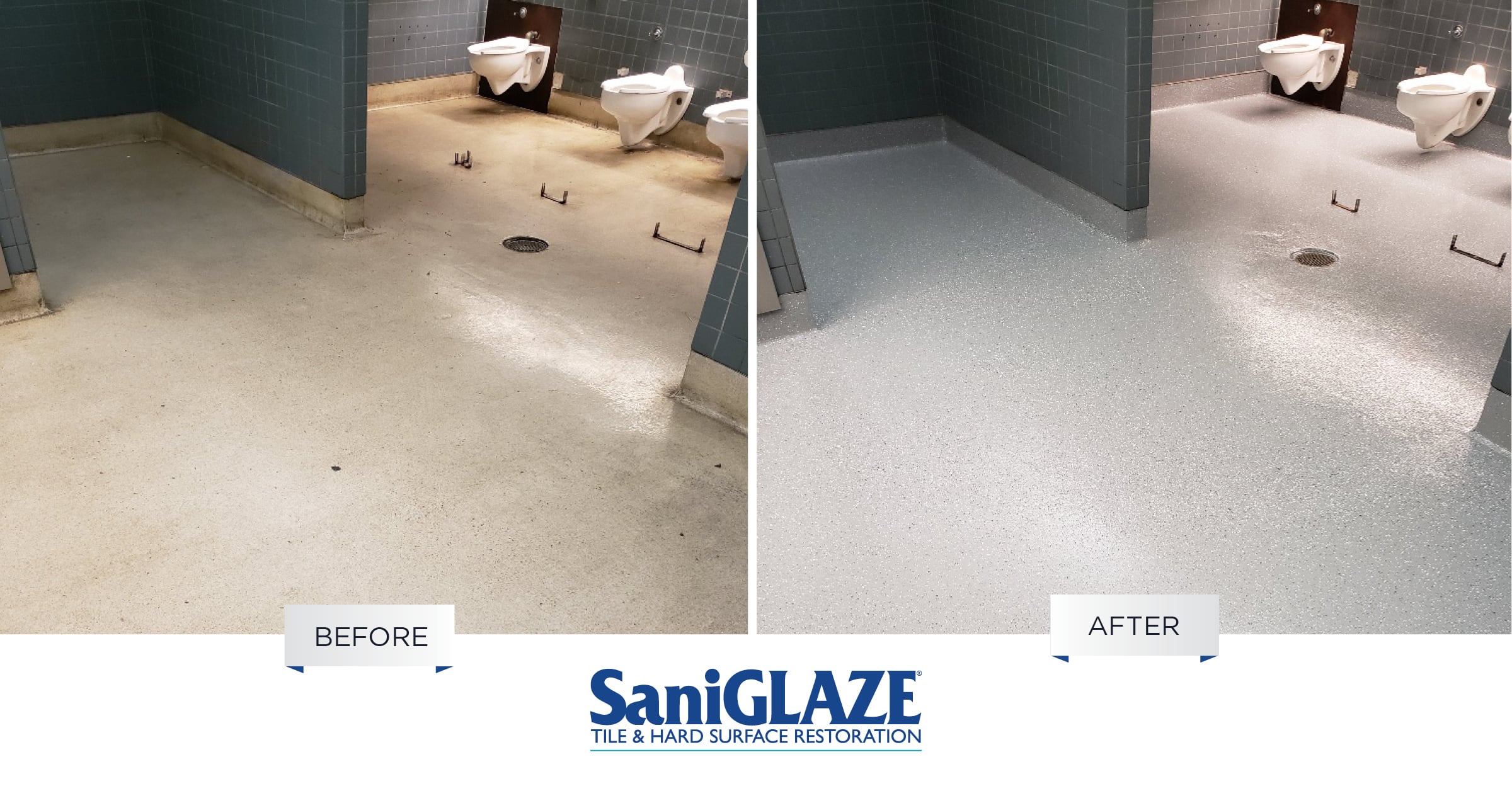
Commercial tile restoration starts with understanding the existing surface. SaniGLAZE processes begin with thorough cleaning and preparation. This includes emulsification (breaking down and loosening embedded dirt and buildup), extraction of surface soils and embedded contaminants, and removal of old seals or finishes when needed.
From there, the appropriate restoration process is selected based on the surface condition and desired result.
Is Commercial Tile Restoration Cheaper Than Replacement?
It can be, but there isn't one price comparison that applies to every facility.
A replacement project may include demolition, disposal, new materials, installation, labor, and the operational impact of taking an area out of service. Restoration involves a different scope, so the best comparison considers the full project cost based on the size, materials, condition, and requirements of the existing surface.
SaniGLAZE positions tile and hard-surface restoration as an alternative to replacement, with the potential for less time and a lower overall price depending on the project.
Frequently Asked Questions
It starts with identifying the source of the problem. Cosmetic and maintenance-related concerns may be candidates for restoration, while extensive tile, substrate, or installation damage may call for a new installation.
Restoration can cost less than a full replacement project, but the difference depends on the condition and scope of the floor. Replacement may involve demolition, disposal, new materials, installation, and other expenses that aren't part of restoration.
In many cases, yes. SaniGLAZE offers processes specifically focused on grout, including restoration and color options. The appropriate treatment depends on the existing grout, surface condition, and desired result.
Project timing varies based on the size of the area, materials, condition of the floor, and scope of work. A SaniGLAZE Service Provider can provide a more accurate timeline after evaluating the facility.
Replacement may be appropriate when tile is extensively damaged, loose, missing, or affected by significant problems below the surface. It may also make sense when the existing flooring isn't suitable for its intended use or a different flooring system is required.
Could Your Commercial Tile Be Restored?
Before budgeting for a complete flooring replacement, find out whether the existing surface is eligible for restoration. SaniGLAZE helps commercial facilities evaluate tile and grout, address aging and hard-to-maintain surfaces, and determine an appropriate restoration approach.

