Education
How Should Schools Restore Aging Tile & Grout?
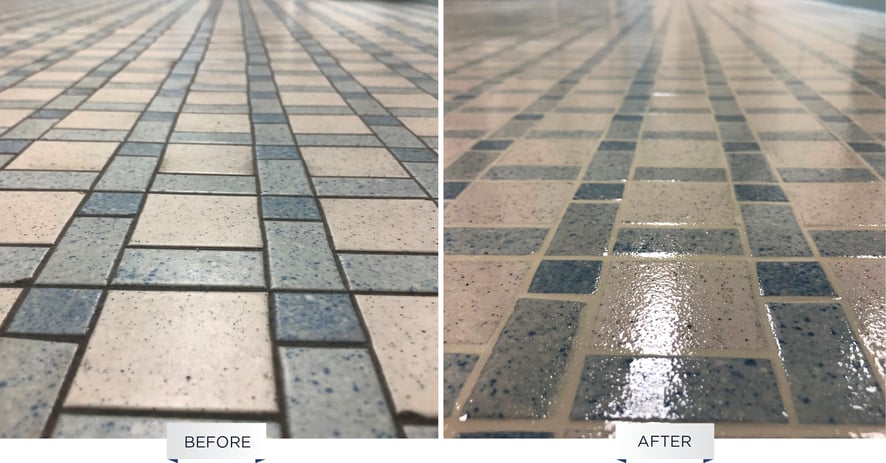
Schools should evaluate whether existing tile and grout can be restored before replacing the entire surface. Professional tile restoration can address embedded soil, staining, deteriorated grout, and worn surfaces while extending the useful life of existing flooring. For schools, restoration can also reduce the demolition and disruption associated with full flooring replacement.
SaniGLAZE provides specialized tile and hard-surface restoration for education facilities, including K–12 schools, colleges, and universities.
See how SaniGLAZE restores tile and hard surfaces in education facilities.
Why Does School Tile and Grout Age?
School floors and hard surfaces see heavy use every day. Foot traffic, moisture, spills, soil, and repeated cleaning can gradually affect the appearance and condition of tile and grout, particularly in high-use areas.
Over time, that traffic can leave tile and grout looking worn even when the underlying surface is still in good condition. Soil can become embedded in grout lines, stains can build up, and repeated cleaning can leave surfaces looking dull or uneven.
Common challenges in education facilities include:
- Heavy foot traffic
- Embedded soil and staining
- Discolored or deteriorated grout
- Moisture in restrooms, locker rooms, and showers
- Food and beverage spills
- Hard-to-clean surfaces
- Frequent cleaning with inconsistent results
- Aging floors that no longer look their best
The question isn't simply whether a floor looks old. It's whether the existing surface can still be restored and kept in service.
Should Schools Restore or Replace Aging Tile?
If the existing tile is structurally sound, restoration may be an alternative to full replacement. Professional restoration works with the tile and grout already in place, addressing accumulated soil, staining, grout condition, and surface appearance.
|
Restore Existing Tile |
Replace Existing Tile |
|
Keeps existing tile in place |
Requires removal of existing flooring |
|
Can address stained or deteriorated grout |
Installs new tile and grout |
|
Less demolition and disposal |
Requires demolition and disposal |
|
May reduce disruption to school operations |
May require more extensive construction |
|
Extends the useful life of existing surfaces |
Appropriate when the existing surface is beyond restoration |
Restoration isn't the right answer for every floor. Cracked, loose, or structurally compromised tile may require replacement. An evaluation of the existing surface can help determine which approach makes sense.
"We’ve used Complete Floor Care Solutions SaniGLAZE products in several of our facilities with great results. I would recommend this product for use in areas that have a high volume of use and need to be cleaned easily and quickly."
Christopher Mano
Maintenance Planner/Flooring, Pinellas County School
How Does School Tile Restoration Work?
School tile restoration starts with evaluating the existing surface. The right approach depends on the condition of the tile and grout, the type of soil or staining present, and how the space is used.
1. Assess the Existing Surface
The SaniGLAZE technician evaluates the tile, grout, soil buildup, staining, wear, and overall condition.
2. Deep Clean
Specialized restoration processes address soil and buildup that routine cleaning may not remove.
3. Restore the Grout
Grout lines can be treated and restored as part of the overall surface, helping improve both appearance and cleanability.
4. Treat and Protect
Depending on the surface and restoration plan, additional treatment can help improve the finished appearance and ongoing maintenance.
5. Establish a Maintenance Approach
Restoration works best when paired with an appropriate ongoing cleaning and maintenance program.
Where Can Schools Restore Aging Tile?
Tile restoration can be used throughout education facilities, including:
- Restrooms: Restore heavily used floors, walls, and grout.
- Locker rooms and showers: Address moisture, buildup, and aging grout.
- Hallways: Refresh high-traffic tile without removing the existing floor.
- Cafeterias and dining areas: Restore surfaces exposed to heavy traffic and food-related soil.
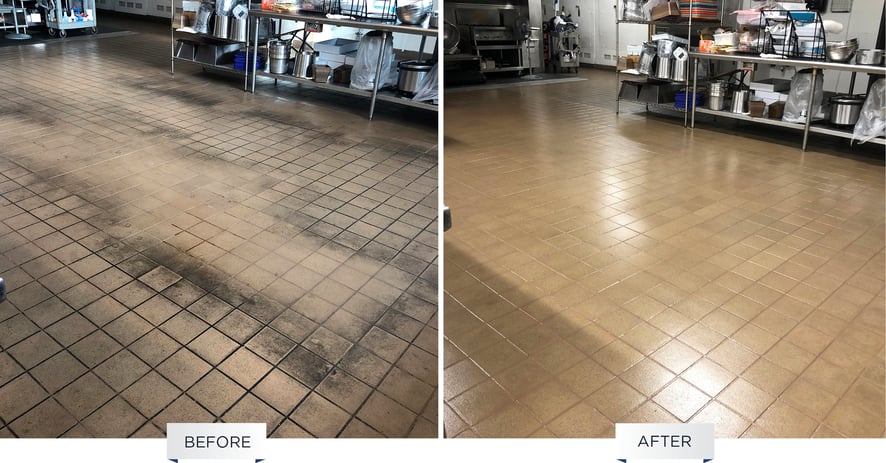
- Kitchens: Address hard-to-clean tile and grout in food-service areas.
- Gym and athletic facilities: Restore surfaces that see constant use.
- Residence halls: Improve aging tile in student housing.
- Pool and wet areas: Address tile and grout exposed to ongoing moisture.
- Common areas: Restore surfaces throughout classrooms, administrative spaces, and other gathering areas.
From high-traffic hallways to moisture-prone locker rooms and restrooms, restoration can help schools get more useful life from the tile and hard surfaces already in place.
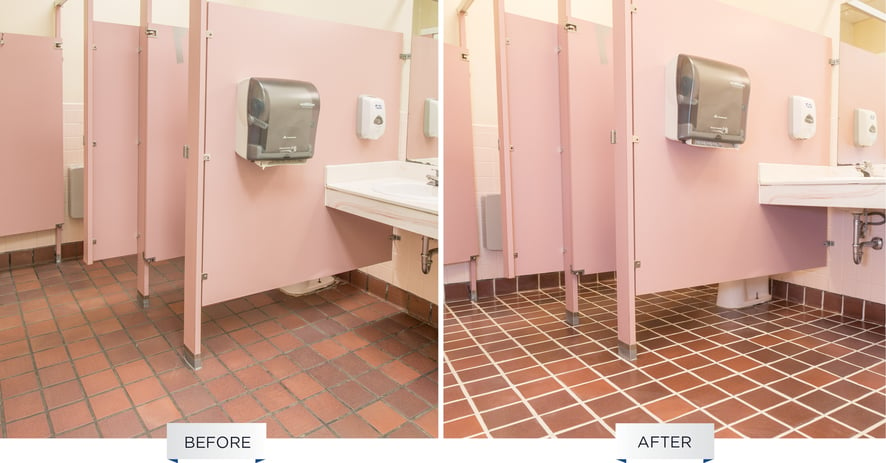
"Before working with SaniGLAZE, we cleaned our tiles the best we could but were not happy with the results. It was time to either replace the tile or take a different direction. The VariGLAZE system was the right choice for us. We were able to choose color options and it enabled us to re-design the restroom without replacing the floors."
Clint Smith
Clint Smith, Citrus County School BoardHow Does Restored Tile Affect School Maintenance?
Restoration doesn't eliminate routine cleaning. Instead, the goal is to create a surface that's easier for custodial teams to clean and maintain.
For schools, that's an important distinction. A floor can look clean immediately after a routine cleaning and still have years of accumulated soil or deterioration affecting its appearance and maintenance.
A restoration program can improve the condition of the existing surface while giving custodial teams a more practical approach to ongoing maintenance.
Can School Tile Be Refreshed or Recolored?
Sometimes, yes. Depending on the existing surface and restoration process, schools may have options for refreshing the appearance of tile and grout, including color and finish considerations.
This can be especially useful when a school wants its facilities to feel more current or reinforce school colors without replacing an otherwise serviceable floor.

Is My School's Tile a Good Candidate for Restoration?
The best candidates for tile restoration typically have structurally sound tile and grout but need attention because of staining, soil buildup, deterioration, or wear.
Restoration may be appropriate when:
- The existing tile is structurally sound.
- The surface looks dirty, stained, or worn despite routine cleaning.
- Grout has become discolored or difficult to maintain.
- The school wants to extend the life of existing flooring.
- Full replacement would create unnecessary disruption.
- The facility wants to improve appearance without a complete flooring renovation.
Replacement may be more appropriate when:
- Tile is cracked or loose.
- The substrate or underlying surface has significant problems.
- The existing material is beyond practical restoration.
- The school wants to completely change the flooring material or layout.
Not sure whether restoration or replacement makes sense for your facility? SaniGLAZE can evaluate the existing surface and recommend an appropriate approach.
How Much Does School Tile Restoration Cost?
School tile restoration costs vary based on the size and condition of the surface, the type of tile and grout, and the restoration work required. The scope of the project and number of areas being restored can also affect cost.
Factors that can affect the cost of a school tile restoration project include:
- Square footage
- Type of tile and grout
- Existing soil and staining
- Condition of the grout
- Number and type of spaces being restored
- Level of restoration required
- Desired appearance or finish
- Ongoing maintenance needs
Restoration may reduce some of the demolition, disposal, and installation costs associated with full replacement, but every project should be evaluated individually.
How Have Schools Used Tile Restoration?
Schools and universities use restoration to address aging, heavily used surfaces without automatically defaulting to replacement.
Bristol Township School District
- Challenge: Aging restroom tile and grout had become difficult to maintain and no longer delivered the appearance the district wanted.
- Approach: The existing surfaces were restored using SaniGLAZE solutions rather than removed and replaced.
- Result: The district was able to refresh the restrooms and extend the useful life of the existing tile.
Why Schools Choose SaniGLAZE
SaniGLAZE specializes in restoring tile and hard surfaces in commercial environments, including education facilities.
Schools turn to SaniGLAZE for:
- Specialized tile and grout restoration
- Experience with high-traffic education environments
- Solutions for high-moisture areas
- Restoration of existing surfaces rather than automatic replacement
- Support for ongoing maintenance
- Documented education projects and case studies
- Options for improving both surface condition and appearance
Frequently Asked Questions
Yes, many older tile floors can be restored if the existing tile and underlying surface are structurally sound. A professional assessment can determine whether restoration is appropriate or whether replacement is necessary.
If the existing tile is structurally sound, restoration may be an alternative to replacement. Restoration can address staining, embedded soil, grout deterioration, and surface appearance without removing the existing floor.
School tile restoration typically begins with an assessment of the existing surface, followed by specialized cleaning and grout restoration. Additional treatments may be used depending on the tile, grout, condition, and desired result.
No. Cracked, loose, or structurally compromised tile may require replacement rather than restoration. An evaluation can help determine the appropriate approach for the existing surface.
There isn't one standard price. Cost depends on factors such as square footage, tile and grout type, surface condition, restoration requirements, and the number of areas included in the project.
Is Your School's Tile Ready for Restoration?
Before budgeting for a complete flooring replacement, find out whether your existing tile can be restored. SaniGLAZE helps education facilities evaluate aging tile and grout, restore high-use surfaces, and develop practical approaches for ongoing maintenance.
Are your restroom facilities causing student health and behavioral issues?
Learn about the potential problems and how educators can restore students’ ability to learn in a clean and healthy environment.
Are your institution’s facilities holding back enrollment?
Learn ways to overcome common cleaning challenges and improve your aging higher education facilities to attract more students.